
Home Organising
A gentler way to organise a small Indian flat
A small home asks for thoughtful choices, rather than more storage. Begin with the places where daily life feels a little awkward.
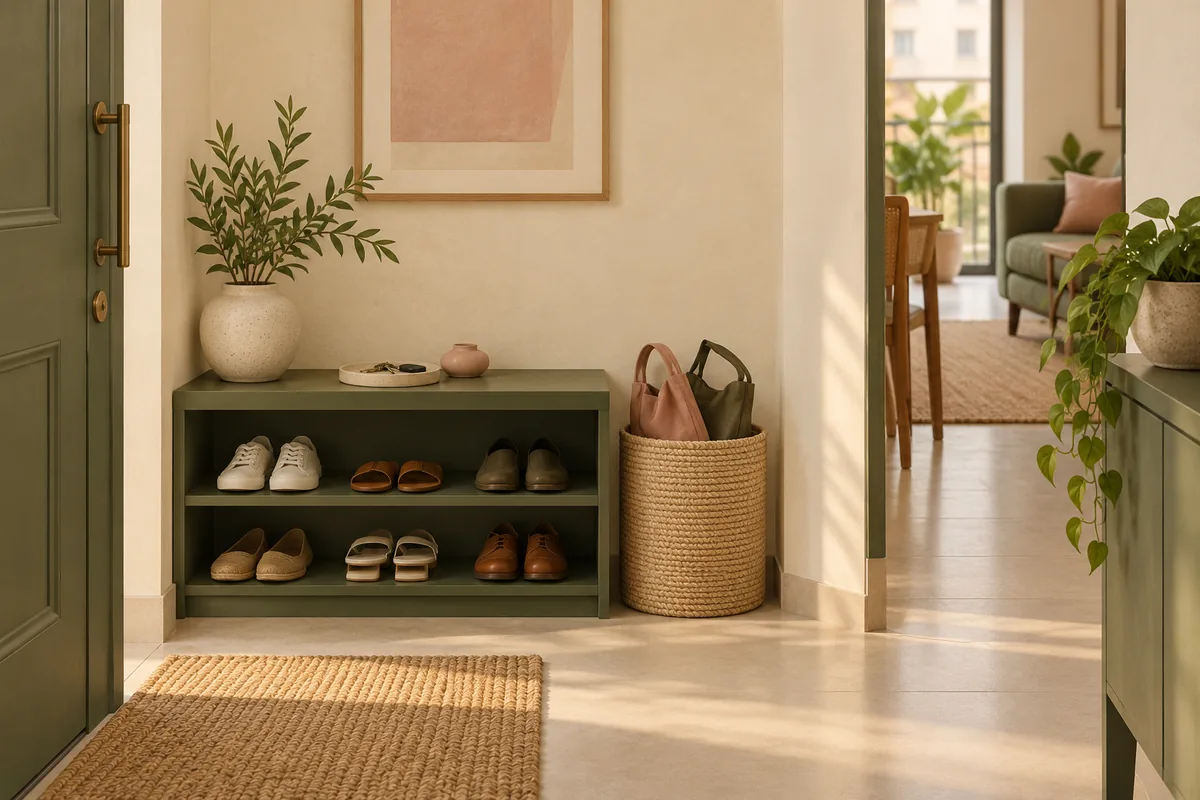
A compact flat can hold a full life: work calls, family meals, visiting relatives and the ordinary belongings that support them. When it begins to feel crowded, the first useful question is where the day gets interrupted. A blocked doorway or a dining chair covered with bags gives you a clearer starting point than an entire cupboard.
Follow one ordinary day
Walk from the entrance to the places you use most. Notice where you put down your keys, charge your phone, change clothes and leave tomorrow’s essentials. Those natural stopping points are good places for a small, purposeful storage solution. If a basket would narrow the walkway, choose another location rather than squeezing it in.
Choose one friction point and describe the job it needs to do. “Somewhere for everyday bags” is easier to solve than “more storage”. Before buying anything, try a tray or box you already own for a few days.
Give shared spaces clear roles
In many Indian flats, the dining table is also a desk and an occasional homework station. It does not need to perform all those roles at once. A portable work tray or a slim document folder lets one activity leave the surface when the next begins.
- Keep everyday items close to where they are used.
- Store occasional belongings away from the busiest shelves.
- Give shared items a place everyone can identify.
- Leave room for doors and drawers to open comfortably.
Use vertical space carefully. Heavy vessels and frequently handled items belong at a safe, reachable height. Avoid balancing storage above doors or placing a step stool where it becomes another obstacle.
Decide before you contain
Empty one shelf onto a clear surface. Separate what you use, what belongs elsewhere and what needs a decision. Return the useful items first. Measure the available shelf and the belongings that remain before choosing containers; their external dimensions matter as much as their capacity.
A beautiful container earns its place by making something easier to find or put away. Matching boxes are optional. Clear access is more useful than a tightly packed arrangement that takes several movements to undo.
Make room for change
An organising system should accommodate a visiting parent, a school holiday or a different working pattern. Keep a modest amount of flexible space instead of assigning every centimetre permanently. Review the first area after an ordinary week and adjust what feels inconvenient.
If several rooms compete for the same space, our home organising services can help you look at the whole home before making individual storage decisions.