
Office & Workspace
Working from home without a spare room
A comfortable work routine can fit into a shared room. Make the start and finish of the working day easier to recognise.
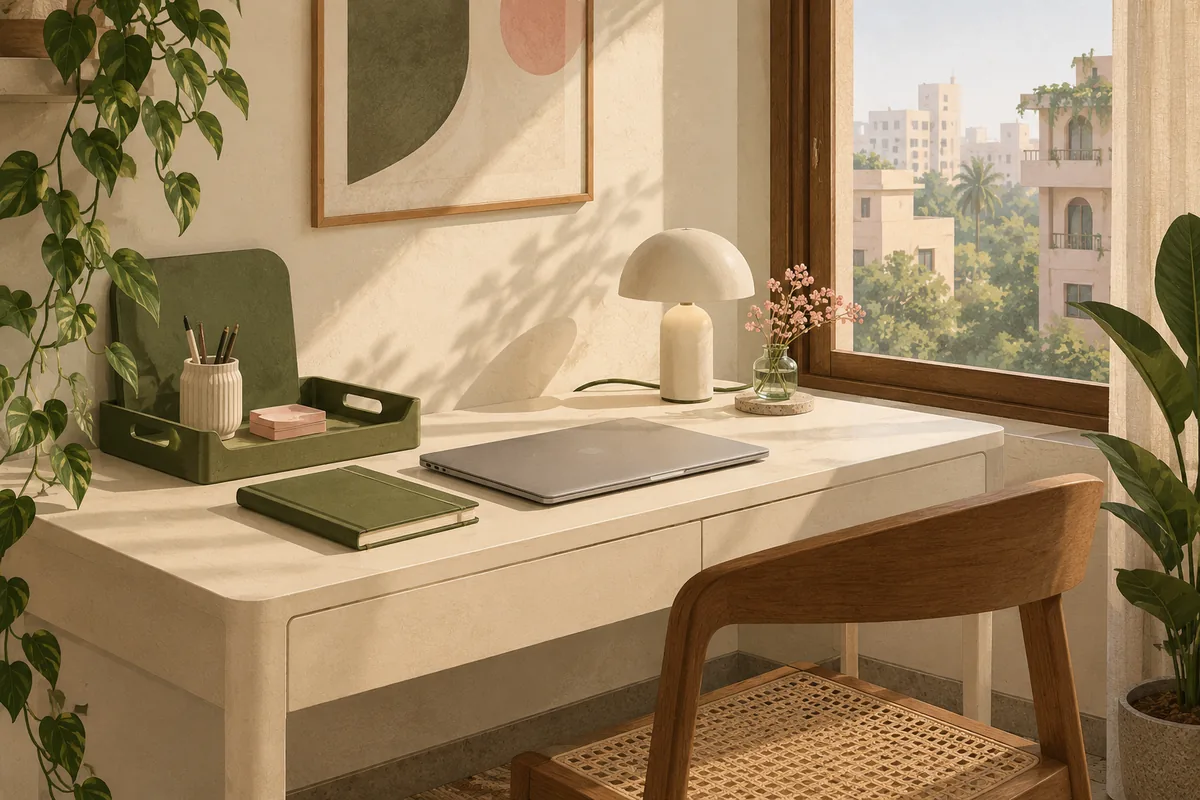
When the dining table is also the office, work can linger long after the laptop closes. Papers spread into meals, charging cables stay underfoot, and the next morning begins with a search for yesterday’s notes. A defined work kit and a clear closing routine can help a shared space change roles more comfortably.
Identify the real working requirements
List what you use every day, what you use occasionally and what must remain confidential. A laptop, notebook and headset may need a different arrangement from a role with printed documents or equipment. Start with those needs before choosing a desk accessory.
Consider light, power access, ventilation and a comfortable working position. Avoid arranging your body around a storage solution that looks neat but makes work uncomfortable. Seek suitable ergonomic advice for persistent discomfort or specialist equipment needs.
Build a portable work kit
Keep daily essentials together in a stable tray, caddy or small bag that can be moved without balancing loose items. Give it a nearby shelf so clearing the table is a single, manageable step. Keep occasional supplies elsewhere and bring them out when needed.
- Keep one place for notes that still require action.
- Separate personal papers from work documents.
- Store confidential material securely according to your work requirements.
- Keep drinks away from documents and electrical equipment.
A portable kit should remain light enough to handle comfortably. If it becomes a miniature archive, remove items that are no longer part of the daily routine.
Give cables a safe route
Use suitable cable management without stretching leads across walkways or trapping them under furniture. Do not overload sockets or improvise electrical connections. Consult a qualified electrician when the room’s power arrangements do not suit the equipment you need.
Keep chargers identifiable so they return to the same place. A small pouch can hold a travelling charger, while the equipment that stays at home has a consistent charging point.
Close the space deliberately
Before finishing, note the next useful task, save and secure your work, and put the daily kit away. Return the room to its next purpose, whether that is dinner, homework or time with family. This can be brief; it does not need to become an elaborate ritual.
Review the arrangement after several ordinary workdays. If one item is always left outside the kit, it may need a better place. If clearing the table feels difficult, reduce the number of steps rather than asking yourself to be more disciplined.
Our office and workspace organising support can help a shared room accommodate work while remaining a comfortable part of the home.